Mini Split Installation

Get help with ductless installation, repair, replacement, maintenance, and deep cleaning. Service options include single-room, garage, heat pump, multi-zone, residential, and commercial systems.
Explore ServiceMini Splits Phoenix installs, repairs, replaces, and maintains ductless comfort systems throughout Glendale, Arizona. Our work includes single-room mini split installation, ductless AC and heat pump installation, garage systems, and multi-zone designs for homes and commercial spaces. We plan systems around the structure, room use, insulation, orientation, and cooling load instead of relying on a generic template. Glendale property owners can request an itemized quote for a new system or help with an existing unit.
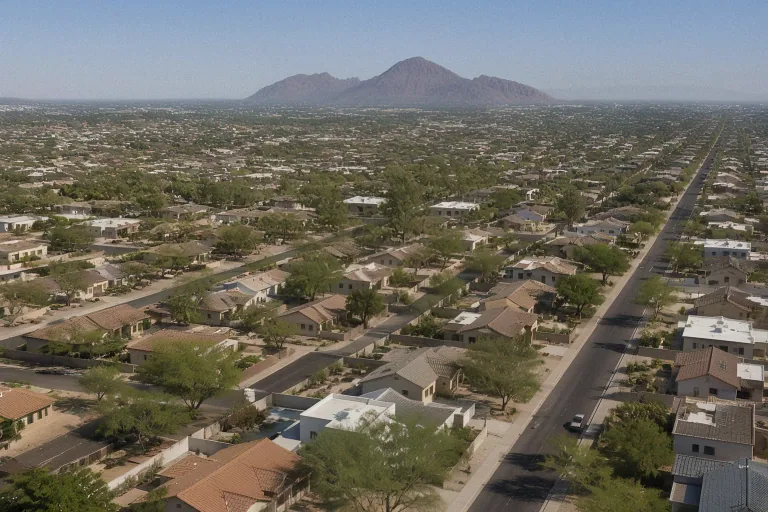
Glendale summers bring average July highs above 105 degrees, while attic and roof-surface temperatures can climb past 150 degrees. That heat exposes weak ductwork, poor sizing, refrigerant-charge errors, and restricted airflow quickly. Our process uses Manual J load calculations, checks existing electrical capacity, and accounts for the line-set route before equipment is selected. Proper installation and commissioning help a ductless system cool reliably through the months when it works hardest.
Service covers Glendale neighborhoods from Catlin Court and Sahuaro Ranch to the Arrowhead area, Westgate, and surrounding West Valley communities named below.
Choose installation, repair, replacement, maintenance, or deep cleaning for homes and commercial spaces in Glendale. Projects range from mid-century block and 1960s slab-on-grade homes near Historic Downtown Glendale to newer stucco construction, retail corridors along 59th Avenue, and spaces near Arrowhead Towne Center, State Farm Stadium, and the Westgate Entertainment District. For service in the neighboring city, visit our Phoenix location page.

Get help with ductless installation, repair, replacement, maintenance, and deep cleaning. Service options include single-room, garage, heat pump, multi-zone, residential, and commercial systems.
Explore Service
Installation begins with the room, the structure, and the intended use. The system is sized with a Manual J calculation, then planned around electrical capacity, condenser clearance, and a sealed line-set route.
Explore Service
Repair visits address error codes, refrigerant leaks, failed capacitors, noisy operation, ice on the indoor coil, and clogged condensate lines. Diagnosis starts at the indoor head before components are opened or replaced.
Explore Service
Maintenance includes filter cleaning, coil inspection, condensate-drain flushing, and refrigerant-pressure checks. During peak summer use, filters should be cleaned every 2-4 weeks, with professional maintenance twice a year.

Replacement becomes worth comparing when a unit reaches its 12-15 year service-life range, develops repeated compressor trouble, or needs a major repair. The evaluation considers age, repair history, remaining warranty, and the cost of continued repairs.

An inspection checks square footage, insulation, window orientation, electrical capacity, airflow, coils, drains, and operating condition. Those findings guide equipment selection for a new project or the repair-versus-replacement decision.

Residential projects include bedrooms, additions, guest suites, converted bonus rooms, casitas, and whole-home ductless retrofits. A slab home with limited attic access may need a different line-set path than a two-story home with vaulted ceilings.

Commercial service covers office suites, retail storefronts, and light-industrial spaces where a rooftop package unit is not practical for the square footage. System design accounts for occupancy loads, operating hours, and separate temperature zones.

For a serious cooling failure, share the error code, sounds, ice, leaking water, and whether the unit still produces cool air. The team can discuss the appropriate diagnostic service and confirm current scheduling without assuming the cause.

Itemized quotes account for equipment capacity, wall construction, line-set length, permits, old-equipment disposal, and any electrical upgrades. That lets property owners compare the full scope instead of a base price that omits required work.
The right equipment depends on more than square footage. Room orientation, insulation, windows, electrical capacity, zone count, wall construction, and line-set routing all influence system capacity and placement. A clear plan also distinguishes cooling-only needs from year-round heat pump comfort.
Use Manual J calculations to match BTU capacity to the room or zone. Rule-of-thumb sizing can cause constant running, short-cycling, or poor comfort during extreme heat.
A single indoor head can solve one room's comfort problem, while multiple heads support additions, guest suites, or bedrooms with independent settings. Choose the zone count before equipment capacity and routing are finalized.
Routing changes with the building. Slab-on-grade homes, vaulted ceilings, exterior walls, and limited attic access each affect the wall penetration, drain path, and distance to the condenser.
Cooling-only needs may suit a room used mainly in summer, while a ductless heat pump also provides winter heating. The decision should reflect how the space is used throughout the year.
Confirm panel capacity, disconnect requirements, condenser clearances, and any HOA placement restrictions before installation. Early planning helps prevent an exterior location or electrical upgrade from becoming a late surprise.
A finished installation should be vacuum-tested, charged to manufacturer specification by weight, and run through full cooling and heating cycles. The final walkthrough should also cover controls and maintenance basics.
Extreme heat, monsoon dust, hard-water scale, and installation errors can show up as poor airflow, constant running, ice, water leaks, error codes, or rising operating costs. A diagnosis should separate maintenance issues from component failures and equipment that no longer makes financial sense to repair.
Request System CheckAn undersized unit may run constantly in peak heat, while oversizing can cause short-cycling and uneven comfort. Load calculations should account for windows, insulation, orientation, and the room's actual use.
Leaks, improper charge, and failing capacitors can reduce cooling or stop the system. Error-code diagnosis and regulated refrigerant handling help identify the specific fault before parts are replaced.
Dust and biological buildup can restrict the drain line or foul the pan. Water around the indoor head, musty odors, or shutdowns tied to a safety switch call for inspection and flushing.
Glendale's monsoon dust and desert landscaping can restrict airflow faster than in milder climates. Dirty filters and coils make the blower work harder and reduce the heat-transfer surface available for cooling.
Mineral scale, mold, dust, and biofilm can collect on the evaporator coil, blower wheel, and drain pan. A controlled deep cleaning reaches buildup that a routine filter change does not remove.
Repeated compressor problems on an older unit can make continued repairs poor value. Compare the next repair with system age, past failures, remaining warranty, and the cost of a correctly sized replacement.
Glendale's varied housing and commercial spaces demand more than a one-size-fits-all installation. The team plans around each structure, uses regulated refrigerant-handling practices, and commissions systems before explaining controls and upkeep. Quotes are itemized so required permits, electrical work, routing, and equipment removal can be considered upfront.
Planning reflects mid-century block homes, newer stucco construction, slab foundations, vaulted ceilings, converted garages, casitas, and commercial tenant spaces. Exterior condenser placement can also account for applicable HOA restrictions before work begins.
Technicians hold current EPA Section 608 certification for regulated refrigerants such as R-410A and R-32. Installation work follows Arizona Registrar of Contractors licensing requirements, with City of Glendale Building Safety Division permits pulled when applicable.
Refrigerant joints are brazed under nitrogen purge, the system is vacuum-tested, and the charge is set to manufacturer specification by weight. Cooling and heating cycles are checked before the controls and maintenance basics are reviewed with the customer.
Each project moves from site assessment and load calculation to placement, installation, testing, and a final system walkthrough. The steps below keep equipment selection connected to the actual room and building conditions.
Measure the room and review insulation, window orientation, building construction, intended use, and existing electrical capacity.
Use Manual J calculations to select the BTU capacity for each room or zone instead of guessing from square footage alone.
Choose indoor-head positions, a line-set path, and an outdoor condenser location with proper clearance on a level padded base.
Mount the equipment, route insulated line sets through a sealed wall penetration, and braze refrigerant joints under nitrogen purge.
Remove moisture and non-condensables with a vacuum test, then charge the refrigerant to manufacturer specification by weight.
Run complete cooling and heating cycles, confirm drainage and controls, then explain remote operation, filter care, and maintenance basics.
Case Study 1: Older homes: Ductless equipment can cool additions, casitas, or rooms that aging attic-run ductwork does not serve efficiently, without opening walls to extend new ducts.
Case Study 2: Converted garages: A dedicated, correctly sized system can condition a workshop, gym, or office independently from the home's central equipment.
Case Study 3: Commercial suites: Multi-zone designs can match occupancy and operating hours across offices or retail areas that need independent temperature control.
Tell us whether you need installation, repair, replacement, maintenance, or deep cleaning and how the room is used. The estimate can account for equipment capacity, zone count, line-set length, wall construction, permits, removal, and electrical needs.
These answers cover common questions about installation cost, Arizona performance, repair decisions, maintenance, system design, and service coverage. Project-specific recommendations follow an assessment of the room, structure, electrical capacity, and existing equipment.
Call Our ExpertsA single-zone installation typically runs $3,000 to $6,000 installed, including the outdoor condenser, indoor head, line set, mounting, and commissioning. Multi-zone systems covering three or four rooms often cost $8,000 to $14,000. Wall construction, line-set length, electrical capacity, permits, and equipment removal can change the final quote.
Yes. Modern ductless systems can perform well in Glendale when the equipment is sized and installed for the room's actual load. Correct charge, condenser clearance, clean coils, and proper commissioning are especially important when summer temperatures stay high.
The $5,000 rule is an industry guideline for comparing a major repair with replacement. If a repair estimate on an aging system approaches or exceeds $5,000, replacement often provides better long-term value. The unit's age, repair history, remaining warranty, and overall condition should also be considered.
Mini splits require an exterior wall penetration and leave the indoor head visible. Upfront cost per zone can be higher than one central system serving the same area, and filters and coils need regular care. They avoid duct losses, but only when the system is sized, installed, and maintained correctly.
A single-zone installation typically takes 4-8 hours, including mounting, line-set routing, brazing, vacuum testing, and commissioning. Multi-zone systems may take a full day or two depending on the number of indoor heads and routing complexity. Enough time should be reserved for proper testing and charging.
Clean the filters every 2-4 weeks during peak summer use and schedule professional maintenance twice a year. A professional visit should include coil inspection, drain-line flushing, and refrigerant-pressure checks. Dust exposure and actual system use may justify more frequent attention.
The recommended interval in Glendale's dusty, hard-water environment is every 12-18 months. Deep cleaning addresses the evaporator coil, blower wheel, and drain pan, removing scale and biofilm that ordinary filter cleaning does not reach.
Ice on the indoor coil, noisy operation with continued cooling, or one failed component on a unit under 8-10 years old may support repair. Replacement becomes more compelling for units over 12-15 years old, repeat compressor trouble, or a major repair that approaches the system's value.
Commissioning includes vacuum testing to remove moisture and non-condensables, charging to manufacturer specification by weight, and running full cooling and heating cycles. The installer should also confirm drainage, controls, and basic maintenance before completing the job.
Applicable installations use permit pulls through the City of Glendale Building Safety Division and follow Arizona Registrar of Contractors licensing requirements. Technicians hold EPA Section 608 certification for regulated refrigerants such as R-410A and R-32. Requirements depend on the project scope, so permitting is reviewed during planning.
Yes, but sizing must account for insulation, doors, windows, solar exposure, and how the garage is used. Uninsulated garages can reach 115-120 degrees in July, so a flat per-square-foot estimate is not enough for a gym, workshop, or office conversion.
A single-zone system suits one bedroom, addition, garage, or other defined space. A multi-zone system connects one outdoor condenser to two, three, four, or more indoor heads with independent controls. The best layout depends on room loads, simultaneous use, and practical line-set routing.
A ductless heat pump provides reverse-cycle heating as well as cooling. That can cover cooler winter nights when Glendale temperatures reach the 40s, subject to correct sizing for the space. It can replace reliance on electric baseboard or older wall heaters in the room it serves.
Glendale coverage includes Historic Downtown Glendale, Sahuaro Ranch, Catlin Court, the Arrowhead area, Berkeley Park, and neighborhoods around State Farm Stadium and Westgate. The service area also includes Peoria, Sun City, Sun City West, Litchfield Park, and bordering communities in Maricopa County.
A well-installed system may save $500-$1,000 per year compared with inefficient window units or aging central air. With proper maintenance, a system can provide a 15-20 year operating life and a typical 5-8 year payback. Actual savings and payback depend on equipment, use, existing-system efficiency, and utility costs.